
Dental Bridges
Dental bridges are one of the most popular methods of restoring missing teeth. They are somewhat similar to dentures, but they are permanently fixed. With modern materials and manufacturing methods, dental bridges have exceptional strength, function, and aesthetic qualities. This, combined with their low price, makes it still a very popular option, despite the rapid development of dental implantology. However, the disadvantages of dental bridges are not small, so it is good to think carefully before putting a bridge in your mouth.
What Are Dental Bridges?
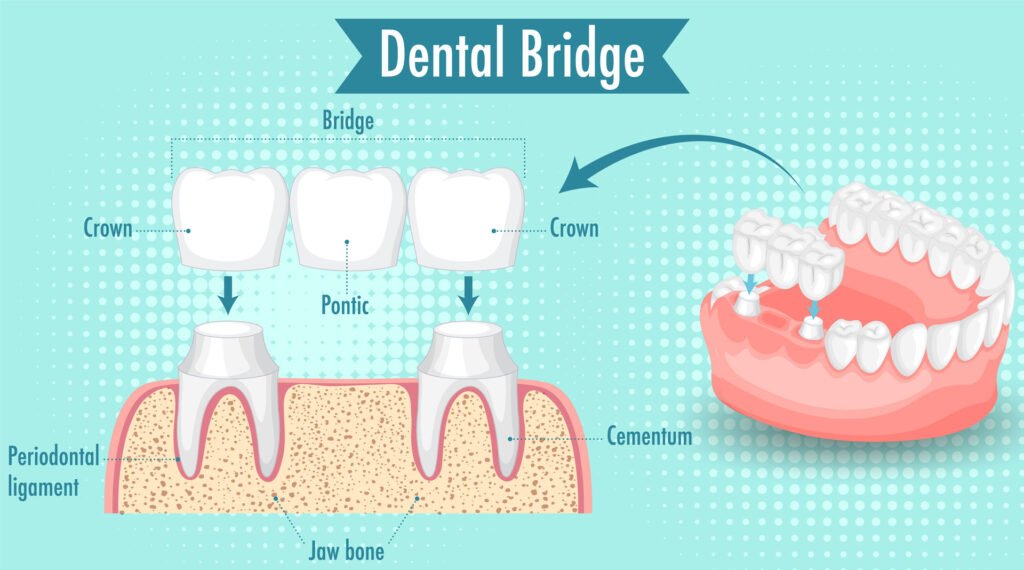
Imagine that in the row of teeth you have one or more missing teeth. A dental bridge is a structure that is made up of dental crowns that are attached to the teeth before and after the missing one, and between them is an artificial tooth called a pontic, which enters the place of the missing one and reaches the gum without piercing it.



What Are the Types of Dental Bridges?
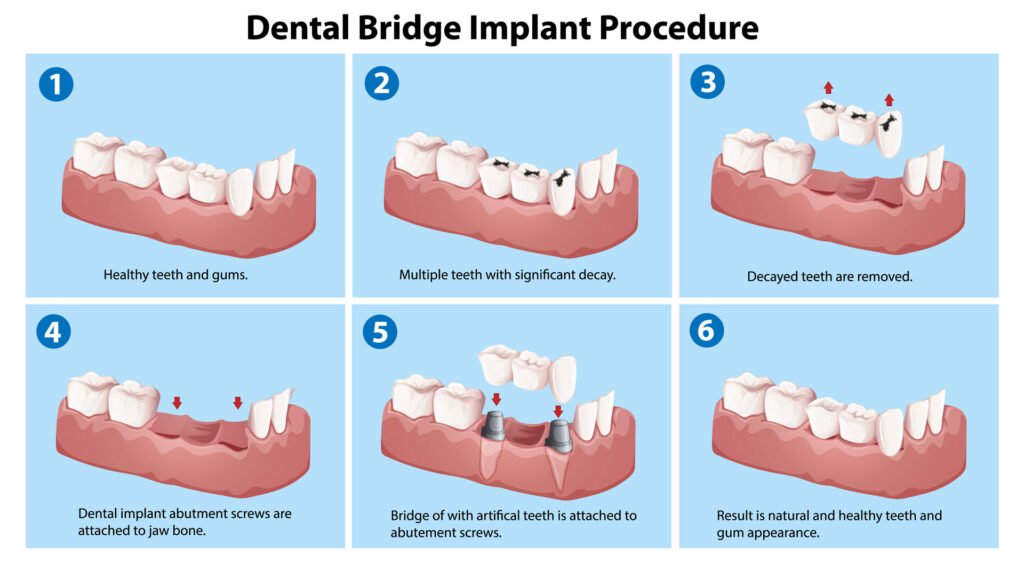
There are four main types of dental bridges:
- Traditional Fixed Bridges: These consist of crowns with a pontic fixed between them.
- Adhesive Bridges: These are fixed to the abutment teeth by gluing, thus eliminating the need to file the abutment teeth. This is their advantage, but at the same time a disadvantage since this type of construction does not have very good strength. For this reason, these bridges are primarily used to restore front teeth.
- Dental Bridges on Implants: As their name suggests, these are placed on dental implants previously placed in the jaw. Thus, with a smaller number of implants, a larger number of missing teeth can be restored.
- Cantilever Bridges: These are attached to only one supporting tooth. This construction was not very successful and therefore this type of bridge is no longer used.
- Temporary Bridges: These can be defined as a separate type, made of plastic and most often placed to protect already filed teeth until the permanent bridges are made.
What Materials Are Dental Bridges Made Of?
Modern materials offer excellent strength and aesthetic qualities:
Metal Dental Bridges
Rarely used, made of precious metals such as gold. They are strong and relatively cheap but not aesthetically pleasing.
Metal-Ceramic Bridges
One of the most popular types.They have the strength of metal bridges, but the layering of ceramic materials on the supporting structure allows for an excellent aesthetic appearance.
For metal-ceramic bridges to function well, several conditions must be met – the missing tooth must be surrounded by healthy and well-aligned teeth. Placing such a bridge requires the supporting teeth to be deeply filed and mortised. Sometimes it is possible that the recession of the crown makes the metal edge of the bridge visible, which disturbs its aesthetics.
Metal-ceramic bridges cannot be used in case of periodontitis, and with good care their service life is about eight years.
All-Ceramic Dental Bridges
They have an extremely good aesthetic appearance. In addition, the qualities of the material do not change over time and under the influence of food and drinks. The ceramic material is also hypoallergenic and does not irritate the gums, and the chipping of the bearing teeth is minimal and gentle.
Ceramic dental bridges are suitable for front teeth and for no more than three teeth at a time. Due to the fragility of the material, the manufacture of pure ceramic for chewing teeth is not recommended.
Zirconium Dental Bridges
They are the best in terms of strength, durability and aesthetics. Zirconium is an extremely strong material from which bridges can be made that are indistinguishable from healthy teeth. Moreover, these bridges do not change under the influence of different foods and drinks.
Zirconium does not cause allergic reactions, and for placing zirconium bridges, aggressive filing of the bearing teeth is not necessary. Getting used to zirconium crowns is very quick – usually a few hours, and their durability can reach up to twenty years. In addition, with zirconia bridges there is no limit to the number of tooth units that can be restored.
What Are the Advantages and Disadvantages of Dental Bridges?
The advantages of dental bridges are
- Low cost – this makes them very accessible to a wide range of people;
- Quick fabrication – the procedure of making them is relatively fast, allowing people to restore their smile in a shorter time frame compare to other dental solutions;
- Easy placement – they can be fitted with minimal discomfort and without need of invasive surgery.
Disadvantages
- Requires filing and sometimes killing of healthy teeth;
- Bone beneath the missing teeth thins and atrophies over time;
- Limited service life, especially for cheaper options – just a few years.
What Are the Contraindications for Placing a Dental Bridge?
Diseases such as stomatitis, periodontitis, pulpitis, and various other infectious and inflammatory diseases of the teeth and gums are obstacles to placing a dental bridge. If you have bruxism, you must first undergo treatment before proceeding with the placement of a dental bridge. Dental bridges (and crowns) are not placed on pregnant and lactating women.
Care of Dental Bridges
With a well-made dental bridge, you get used to it very quickly. Dental bridge care is no different from daily dental care – brushing twice a day with toothpaste and mouthwash. It is recommended to do preventive examinations and professional cleaning every six months. This will provide the dental bridge with trouble-free and long-lasting operation.
What Is the Procedure for Placing a Dental Bridge?
Placing a dental bridge requires two or three visits within a few days:
First Visit
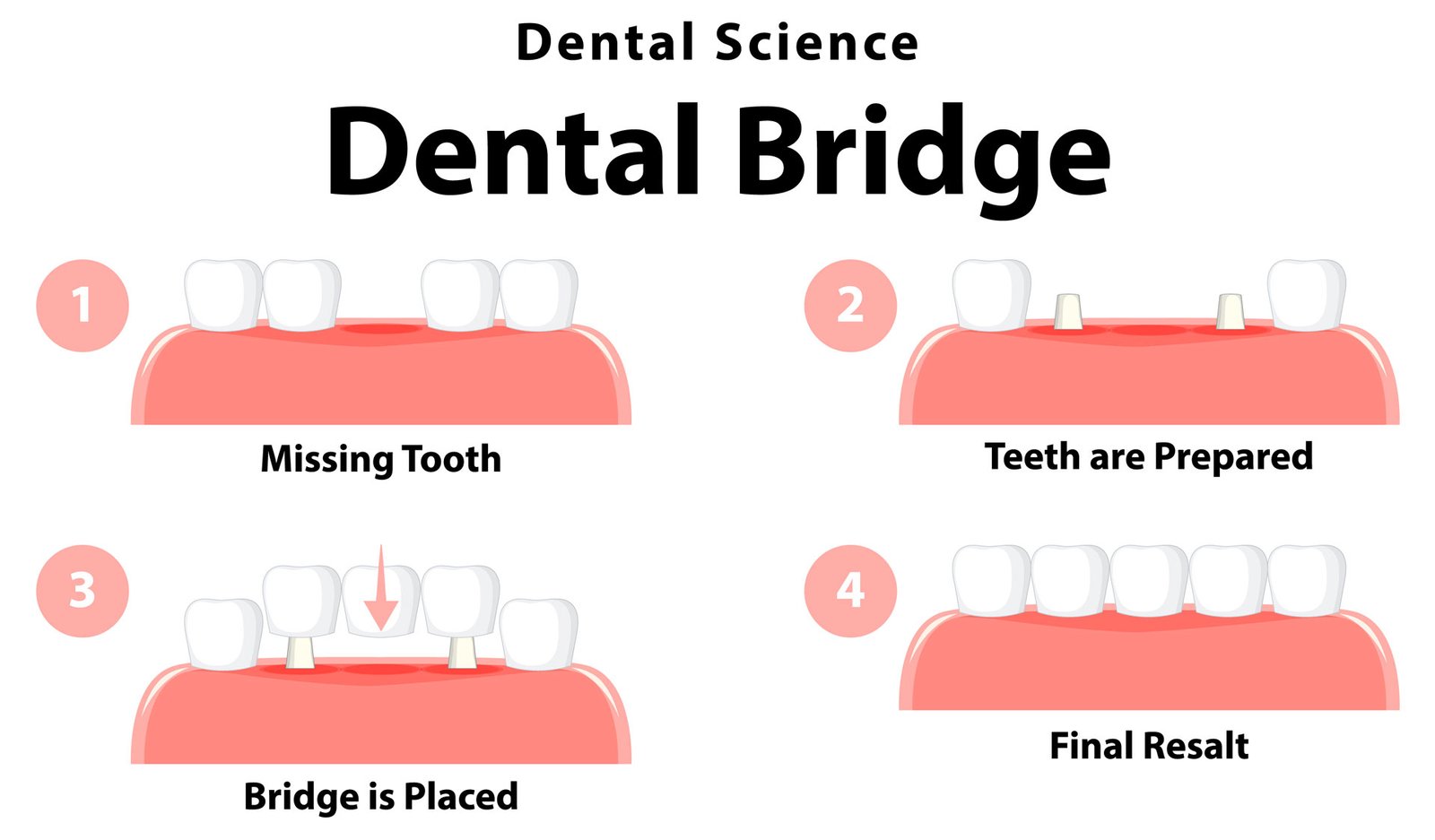
The supporting teeth are prepared and an impression is taken or the jaw is scanned, depending on the chosen type of bridge and manufacturing method. Finally, temporary crowns are placed on the treated teeth.
Second Visit
A sample of the bridge is made. Depending on the material chosen, the bridge can be permanently fixed (for example, in the case of a zirconia bridge) or returned to the dental lab for layering of the ceramic material (in the case of metal-ceramic bridges).
Third Visit (if required)
Permanent fixation and finishing of the dental bridge.
What Are the Prices of Dental Bridges?
Dental bridges are the most affordable way to restore missing teeth. Prices in the clinics we work with are significantly lower than those in Great Britain, without affecting the quality of materials or workmanship. To provide you with a price, we need to get to know your case. This can be done through the online consultation that we offer. To register for an online consultation, use THIS FORM.
| Country | Price |
|---|---|
| USA | $7,000–$10,000 |
| UK | £5,000–£8,000 |
| Turkey | €2,500–€4,500 |
| Bulgaria / Eastern Europe | €3,000–€5,000 |
Get a free price quote customized to your treatment goals and travel preferences.
How Do We Work
Our process is designed to make your breast augmentation journey smooth, informed, and successful:

Contact us

Online consultation

Book the procedure

Travel to the clinic

Procedure

Hospital stay

Take your after care plan

Flight home
By partnering with experienced cosmetic surgeons and providing comprehensive support, we help you achieve the best possible results with confidence and peace of mind.
Get a free price quote customized to your treatment goals and travel preferences.
Frequently Asked Questions
How quickly do patients adapt to a dental bridge?
Most patients adapt quickly to a dental bridge, typically within a few days to a week.
What dietary restrictions should I follow with a dental bridge?
Avoid hard and sticky foods, as they can damage the bridge and affect its longevity.
How can harmful habits affect my dental bridge?
Avoid biting nails or pens, as these actions can damage the bridge and reduce its effectiveness.
How important are regular check-ups for my dental bridge?
Regular dental visits are crucial for the longevity of the bridge, ensuring it remains in good condition and any potential issues are addressed promptly.
Why is good oral hygiene important with a dental bridge?
Good oral hygiene is essential to prevent infections around the bridge and maintain overall oral health.
Can dental bridges improve speech?
Yes, dental bridges can help improve speech that may have been affected by missing teeth, as they restore the natural structure of the mouth and teeth alignment.
Do dental bridges require special cleaning tools?
While standard brushing and flossing are essential, there are special cleaning tools like floss threaders and interdental brushes that can help clean around and under the bridge more effectively.
Can dental bridges be repaired if damaged?
Depending on the extent of the damage, dental bridges can often be repaired by a dentist, though significant damage might require replacement.
Online Consultations
You can now speak directly with top-rated plastic surgeons from the comfort of your home. Book a virtual consultation or view surgeon availability now.
Ready to take the next step? Book a consultation, request more info, or join our newsletter for breast augmentation updates and offers.
Subscribe to newsletter
Other Related Procedure: