
Dental Crowns
Dental crowns are one of the most frequently used tools in dentistry. This is because they provide an answer to many of the most common dental problems. They can also be combined with other means such as implants, bridges and dentures. From preserving and strengthening an orderly tooth, to improving the aesthetic vision – dental crowns find a wide range of applications.
What is a Dental Crown
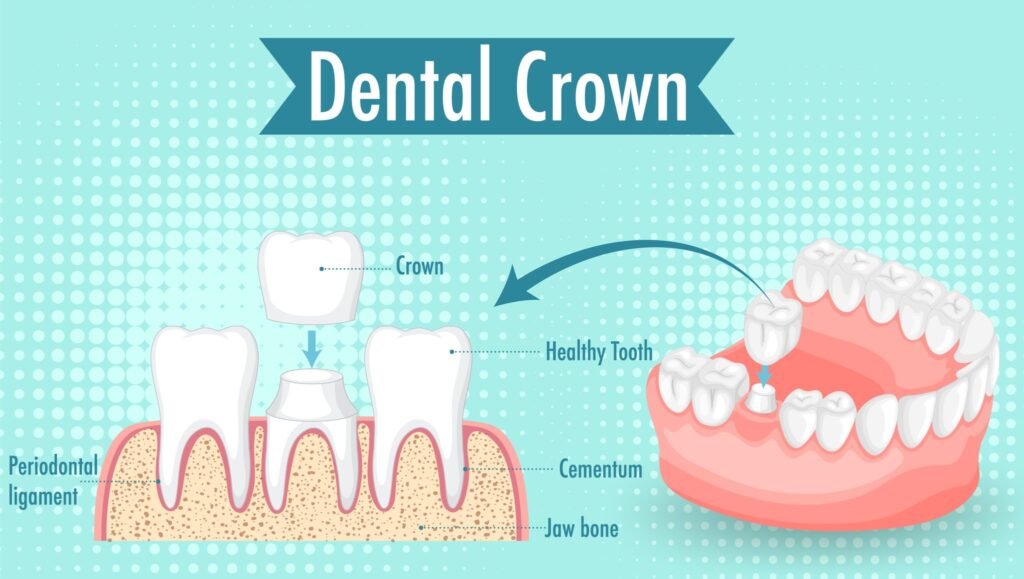
A dental crown is a tooth-shaped covering that is placed over a damaged tooth. The crown restores the shape and size of the tooth, increases its strength and also the way it looks. A well-made crown is indistinguishable from other teeth both in appearance and strength.
What are dental crowns used for
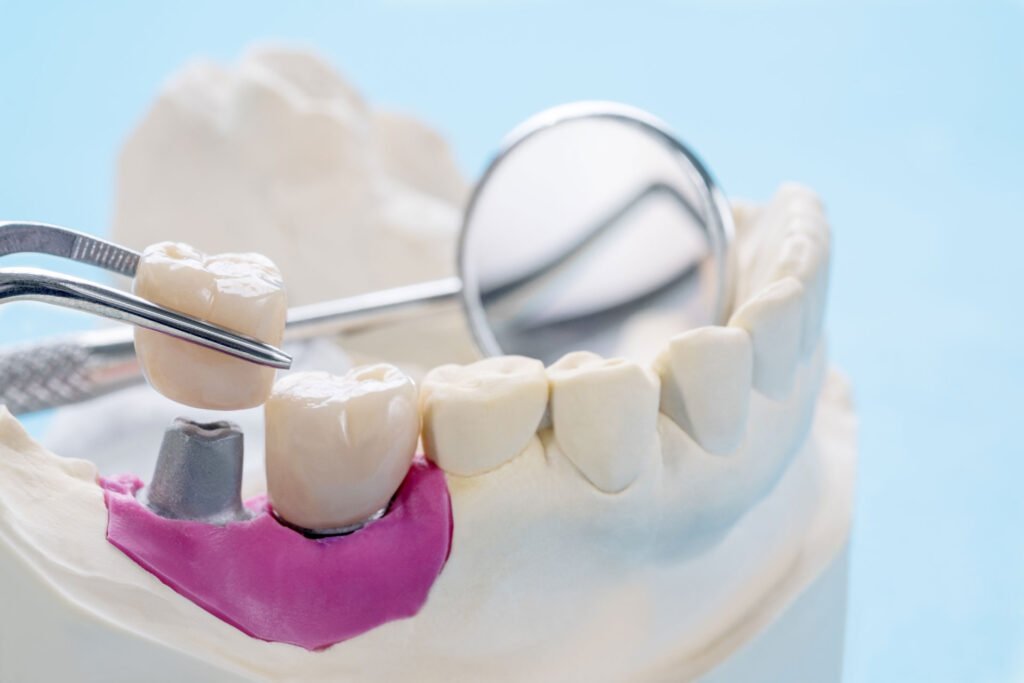
Indeed, the application of dental crowns is very wide. Some of the main problems they solve are:
- To protect damaged teeth from further damage, as well as to strengthen them;
- To restore a broken or very worn tooth;
- To cover a dental implant;
- To cover and strengthen a tooth with a very large filling;
- To cover severely deformed or discoloured teeth;
- To make a cosmetic modification.
What materials are dental crowns made of?
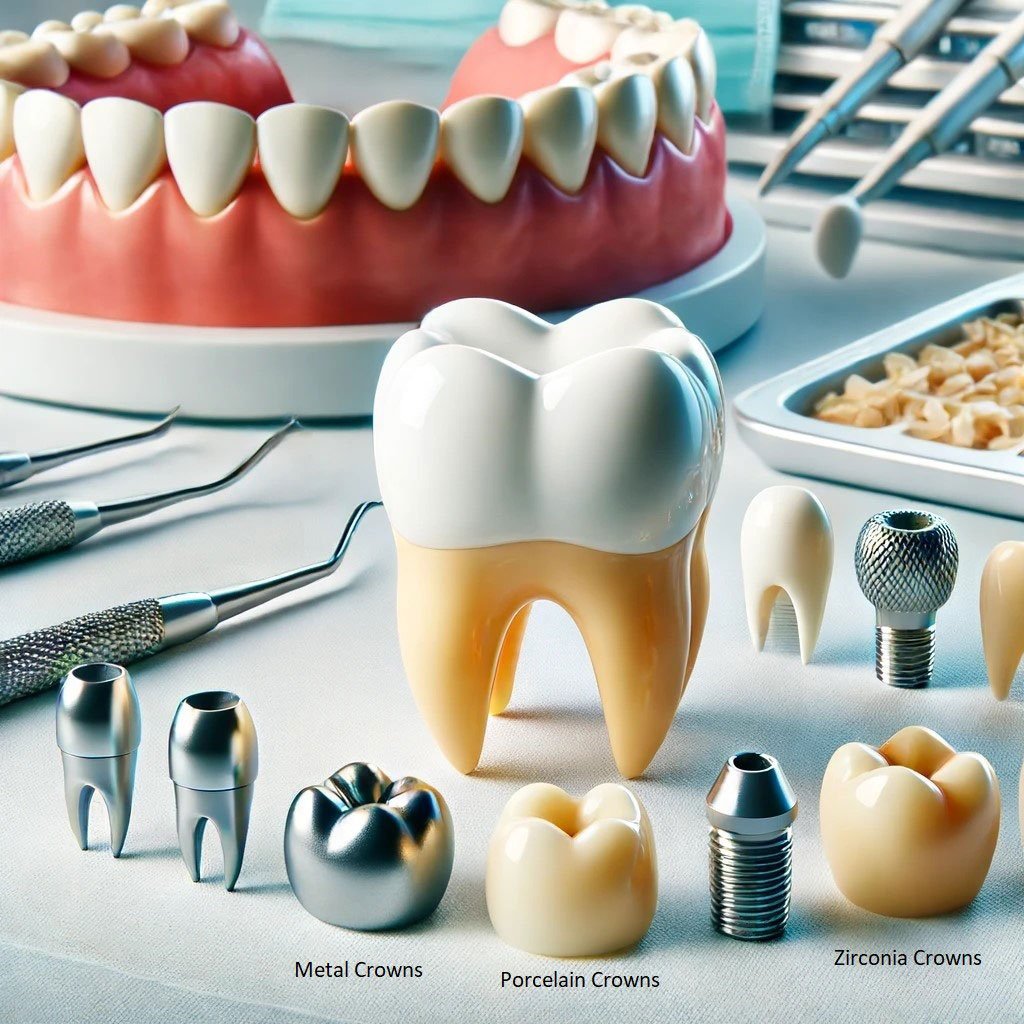
The main materials from which a dental crown can be made are gold, porcelain, porcelain fused to metal, zirconium and lithium disilicate.
Gold crowns
They are not actually gold, but are made of various copper alloys. They are not a very popular option these days, but are still used and offered in certain cases. This is because they have several specific advantages:
- Extremely strong and resistant to wear – their rate of wear is very low, comparable to that of tooth enamel;
- Their placement requires the removal of a smaller part of the tooth on which they are placed;
- With proper care, they last extremely long.
The obvious disadvantage of this type of crown is that they do not look like natural teeth. Also, in rare cases, they can cause allergic reactions in people sensitive to these metals.
Porcelain crowns
Probably the most popular type of crown used today. They are completely made of porcelain. In terms of how they look, porcelain crowns are the closest to natural teeth. They can be made virtually indistinguishable in shape, size, color and texture. This is why this type of material is preferred when crowns are to be placed on front teeth. Porcelain is also a material that is non-toxic and does not cause allergic reactions.
The main disadvantage of porcelain crowns is their lower strength. Therefore, patients with bruxism are unsuitable for placement of porcelain crowns.
Metal-porcelain crowns
This is also one of the most popular types of crowns that are used. They combine the qualities of the materials that are used for their manufacture – strength, because their base is metal, and an excellent aesthetic appearance, which is achieved with the porcelain coating. They are an excellent choice, not only because of the strength and aesthetics, but also because of the good price – significantly lower than all-porcelain crowns.
Their main drawback is that sometimes the metal forms a thin gray line, just above the gum, which disturbs the perfect aesthetic appearance.
Zirconium crowns
Zirconium is a material that has been used for a relatively short time. This material has strength similar to that of metal and aesthetic possibilities similar to those of porcelain. For this reason, it is gaining more and more popularity. Zirconium has many advantages:
- Strength and excellent aesthetic appearance;
- The crown can be made on site without the need to send it to a dental laboratory;
- Excellent acceptance by the patient’s body – the absence of metal excludes the possibility of an allergic reaction;
- Zirconium has excellent wear resistance and is very durable over time.
The qualities of zirconia can sometimes be a problem – teeth against a zirconia crown may start to wear faster due to the strength of the crown. Sometimes because of the thickness of the material, these crowns are difficult to adjust.
Lithium dislicate crowns
This material is the latest to be used to make crowns in the modern dental industry. It is a type of ceramic material that is light, thin and very strong. Crowns made of lithium dislocate are very strong and look great. They are an excellent choice for both front and back teeth. Their main disadvantage is the higher price.
What is the procedure for placing a dental crown
Usually two or three visits to the clinic, spaced over several days, are required to fully complete the dental crown placement procedure.
At the first visit, the doctor processes the teeth that will be fitted with crowns and then takes an impression either through a special silicone mold or through specialised computerised technology that scans the teeth and jaws. The impression then goes to the dental laboratory where the crowns are made.
At the second visit to the clinic, the finished crown is placed and tested. If everything is in order, depending on the type of crown, it is either permanently bonded (for porcelain crowns) or sent for porcelain coating (for metal-porcelain crowns).
If it was necessary to return the crown to the dental laboratory for finishing, at your third visit, it will be permanently placed.
What are the prices of dental crowns
The price will be the best possible for you, not only compared to the prices in England, but also as a price-quality ratio.
We offer an online consultation with our doctors, who, after getting to know your case, will be able to offer you different options and corresponding prices for making crowns.
Take advantage of the online consultation HERE.
| Country | Price |
|---|---|
| USA | $7,000–$10,000 |
| UK | £5,000–£8,000 |
| Turkey | €2,500–€4,500 |
| Bulgaria / Eastern Europe | €3,000–€5,000 |
Get a free price quote customized to your treatment goals and travel preferences.
How Do We Work
Our process is designed to make your breast augmentation journey smooth, informed, and successful:

Contact us

Online consultation

Book the procedure

Travel to the clinic

Procedure

Hospital stay

Take your after care plan

Flight home
By partnering with experienced cosmetic surgeons and providing comprehensive support, we help you achieve the best possible results with confidence and peace of mind.
Get a free price quote customized to your treatment goals and travel preferences.
Frequently Asked Questions
Can dental crowns be used to improve my smile?
Yes, dental crowns can enhance the appearance of your smile by covering discolored or misshapen teeth, giving you a more uniform and attractive look.
How do dental crowns help in preserving natural teeth?
Dental crowns protect and strengthen damaged teeth, preventing further decay and maintaining the tooth’s structure, which can prolong the life of your natural teeth.
Are dental crowns noticeable?
Modern dental crowns are designed to match the color, shape, and size of your natural teeth, making them virtually indistinguishable from real teeth.
Can dental crowns affect my bite?
Properly fitted dental crowns should not affect your bite. In fact, they can improve it by restoring the natural shape and function of your teeth.
Are there any dietary restrictions with dental crowns?
While you can eat most foods, it’s advisable to avoid extremely hard or sticky foods that might damage the crown or dislodge it.
Can dental crowns be placed on any tooth?
Yes, dental crowns can be placed on any tooth, whether it’s a front tooth for cosmetic reasons or a back tooth for functional reasons.
How are dental crowns maintained?
Maintain dental crowns by practicing good oral hygiene, including regular brushing, flossing, and dental check-ups to ensure longevity and health of the crowns and surrounding teeth.
Do dental crowns require special care?
No special care is required beyond your regular oral hygiene routine. However, avoiding habits like grinding your teeth or chewing on ice can help extend the life of your crowns.
Are there alternatives to dental crowns?
Yes, alternatives include veneers, inlays, onlays, and fillings, depending on the condition of the tooth and the desired outcome.
Can dental crowns prevent tooth loss?
By strengthening and protecting damaged teeth, dental crowns can help prevent tooth loss and the need for more extensive dental treatments.
Are there any health benefits to having dental crowns?
Yes, besides improving appearance and function, dental crowns can alleviate pain from damaged teeth and help maintain oral health by protecting teeth from further decay or damage.
Online Consultations
You can now speak directly with top-rated plastic surgeons from the comfort of your home. Book a virtual consultation or view surgeon availability now.
Ready to take the next step? Book a consultation, request more info, or join our newsletter for breast augmentation updates and offers.
Subscribe to newsletter
Other Related Procedure: